

Google Ads or Facebook Ads: Which Should You Choose?
- Noor Ul Ain Tahir
- Dec 5, 2023
- 4 min read


You are a new business and planning to expand your reach. The best option for you will be to go for paid social media marketing, which means advertisements. Now you have to see what is the best for your business. Where do you have a target audience? Does your audience use social media more or Google? What interests does your target audience have? These are just a few questions from the many which you have to consider.
There are 2 main platforms for advertisements, Facebook and Google. By answering the questions above, you can decide which platform is the best for you. In this article, you will learn about both platforms' major differences and similarities. This will help you choose the best one for your business.
Google Ads
Google Ads is a robust online advertising platform developed by Google that enables businesses to create and display ads across a variety of Google's services, including search results, websites within the Google Display Network, YouTube, and more.
Through a keyword-based bidding system, advertisers can bid on specific keywords relevant to their products or services, ensuring their ads appear when users actively search for related information.
Google Ads offers a diverse range of ad formats, including text ads, display ads, video ads, and app promotion ads. The platform provides detailed analytics and tracking tools, allowing advertisers to measure the performance of their campaigns and optimize them for better results. With its broad reach and precision targeting capabilities, Google Ads is a powerful tool for businesses looking to increase visibility, drive website traffic, and achieve specific marketing objectives in the digital space.
Facebook Ads
Facebook Ads is an advertising platform developed by Facebook that empowers businesses to create and showcase targeted ads on the social media giant's platform. Facebook Ads utilizes visually engaging formats, including image and video ads, seamlessly integrated into users' news feeds on Facebook, Instagram, Audience Network, and Messenger. This platform is particularly effective for brand awareness, engagement, and interest-based campaigns, fostering social interactions through likes, shares, and comments.
With a flexible bidding model, advertisers can choose between various campaign objectives, such as clicks, impressions, or conversions. The comprehensive analytics and tracking tools provided by Facebook enable advertisers to assess the performance of their campaigns and make informed adjustments to optimize results, making Facebook Ads a valuable tool for businesses seeking to connect with a diverse and engaged audience across social media channels.

Difference Between the Platforms
The factors are the same but there are key differences in a lot of aspects. Let’s find out what are those and which one is the best for your business.
1. Audience Targeting
Facebook Ads: Excellent for demographic targeting, allowing you to reach users based on age, gender, interests, behaviors, and connections.
Google Ads: Strong for intent-based targeting, reaching users actively searching for specific products or services using keywords.
2. Ad Formats
Facebook Ads: Emphasizes visual content with options for image and video ads. Suitable for brand awareness and engagement campaigns.
Google Ads: Offers various ad formats including search ads, display ads, and video ads, catering to different campaign goals and audience preferences.
3. Placement
Facebook Ads: Displayed in users' feeds on Facebook, Instagram, Audience Network, and Messenger.
Google Ads: Displayed in search engine results, on websites within the Google Display Network, and on YouTube.
4. User Intent
Facebook Ads: Captures users' attention based on their interests and behaviors, making it effective for creating demand and brand awareness.
Google Ads: Targets users actively searching for information, products, or services, indicating a higher level of intent to purchase or take action.
5. Keyword vs. Interest Targeting
Facebook Ads: Focuses on interest-based targeting, allowing you to define your audience based on their likes, interests, and activities on the platform.
Google Ads: Relies on keyword targeting, enabling you to bid on specific keywords relevant to your business.
6. Cost Structure
Facebook Ads: Generally based on a bidding model with costs related to impressions, clicks, or conversions.
Google Ads: Uses a bidding model, with costs based on clicks (CPC), impressions (CPM), or conversions (CPA).
7. Tracking and Analytics
Facebook Ads: Provides detailed analytics on engagement metrics (likes, shares, comments) and allows for tracking conversions through the Facebook Pixel.
Google Ads: Offers comprehensive tracking tools, including conversion tracking, Google Analytics integration, and detailed reporting on various performance metrics.
8. Mobile Advertising
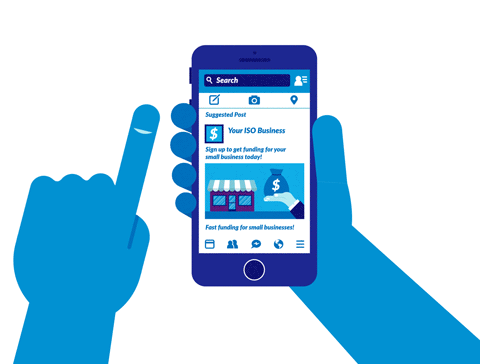
Facebook Ads: Well-integrated with mobile devices, considering the high usage of Facebook and Instagram on mobile platforms.
Google Ads: Mobile-friendly with various ad formats suitable for mobile devices.
Similarities Between the Platforms
While Google Ads and Facebook Ads serve different purposes and operate on distinct platforms, they share some similarities in their advertising functionalities. Here are a few key similarities between Google Ads and Facebook Ads:
Ad Auction System
Both platforms operate on an auction system where advertisers bid for ad placements. Advertisers with higher bids and better ad relevance are more likely to have their ads displayed.
Targeting Options
Both platforms offer sophisticated targeting options to help advertisers reach their desired audience. Advertisers can target users based on demographics, interests, behaviors, and other criteria to refine their audience.
Conversion Tracking
Both platforms provide tools for advertisers to track and measure conversions. Advertisers can monitor actions such as website visits, form submissions, and purchases to assess the effectiveness of their campaigns.
Budget Control
Advertisers on both platforms have control over their budgets, allowing them to set daily or lifetime budgets to manage their advertising spend.
Mobile Advertising
Both Google Ads and Facebook Ads are optimized for mobile devices. Advertisers can reach users on smartphones and tablets through responsive ad formats.
Remarketing
Both platforms support remarketing strategies, allowing advertisers to target users who have previously interacted with their websites or ads.
Conclusion
Choosing between Facebook Ads and Google Ads depends on your specific business goals, target audience, and the nature of your products or services. In many cases, a combination of both platforms can create a well-rounded digital marketing strategy, capturing users at different stages of the buying journey and maximizing overall reach and effectiveness.


Comments